Interview Intelligence
Structured Interviews vs. Traditional Interviews: Which Predicts Performance Better?
Structured interviews predict job performance better than traditional, conversational ones. When every candidate answers the same job-related questions and is scored on the same anchored scale, hiring teams compare evidence instead of impressions. This article explains the difference, why it matters, and how to convert your interview process one step at a time.
By VritiPublished 5 min read
What is the difference?
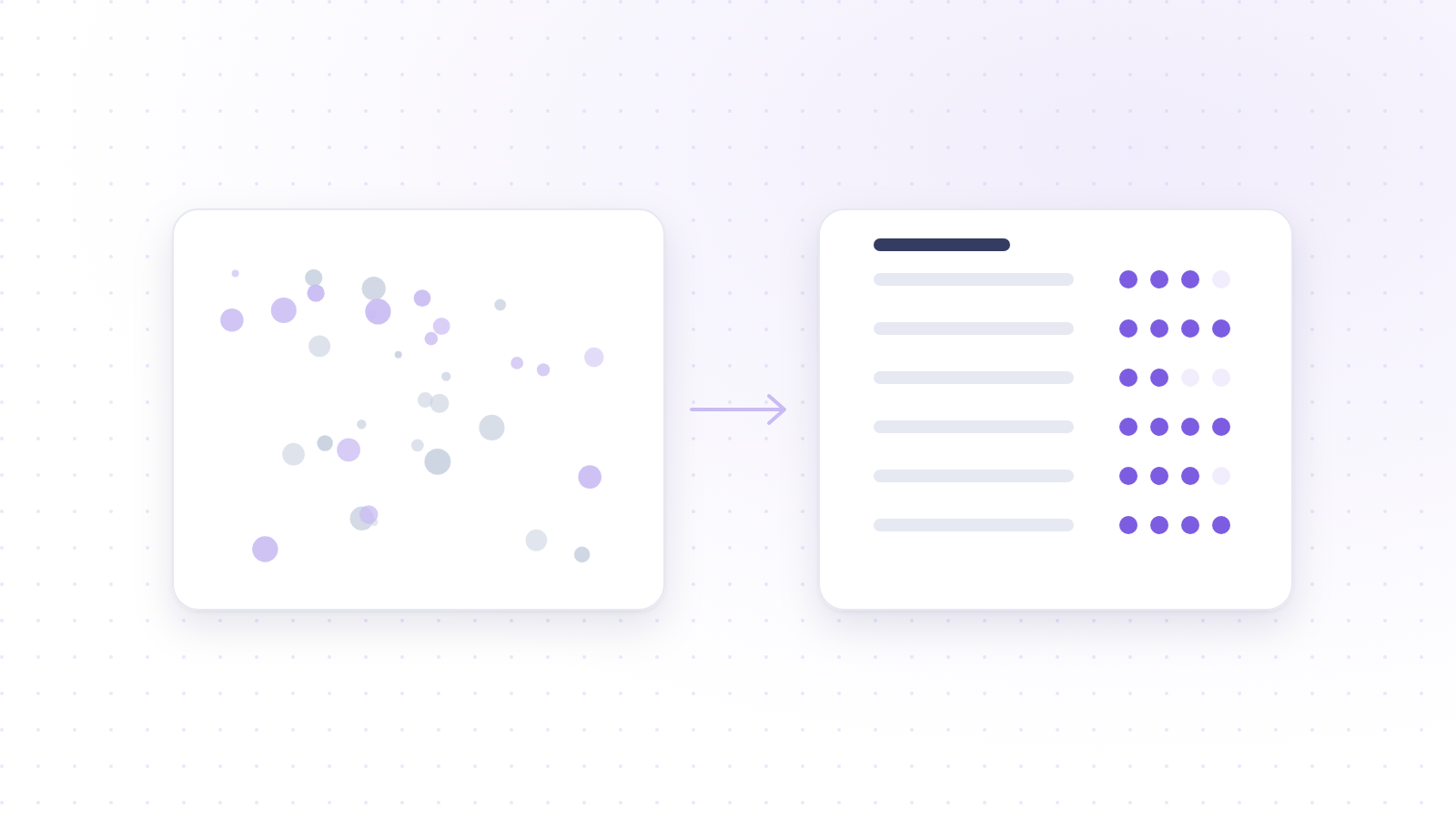
A traditional (unstructured) interview is a conversation. The interviewer decides what to ask as it goes, follows whatever seems interesting, and forms an overall impression that is often written up afterwards.
A structured interview is planned around the job. Every candidate for the role is asked questions about the same criteria, in a consistent order, and each answer is scored against a rating scale that describes what weak, adequate and strong answers look like.
| Traditional interview | Structured interview | |
|---|---|---|
| Questions | Chosen during the conversation | Planned in advance from the job's criteria |
| Consistency | Varies by candidate and interviewer | Same criteria for every candidate |
| Scoring | Overall impression | Each criterion scored on an anchored scale |
| Notes | Often written from memory afterwards | Evidence captured during the interview |
| Comparing candidates | Hard: different conversations | Direct: same questions, same scale |
| Interviewer preparation | Little | Training and a shared scorecard |
What the research says
Personnel-selection research has compared hiring methods for decades. Large meta-analyses, from Schmidt and Hunter's widely cited 1998 review to Sackett and colleagues' 2022 re-analysis, have consistently found structured interviews among the strongest predictors of job performance, and clearly ahead of unstructured interviews.
The reason is not that conversation is bad. It is that an unstructured interview measures different things for different candidates, and measures some of them poorly.
Why traditional interviews fall short
- Different questions, different evidence. If one candidate talks about system design and another about their last team, you cannot compare them fairly.
- First impressions dominate. Interviewers tend to decide early and spend the rest of the conversation confirming that decision.
- Similarity bias. People rate candidates who share their background, school or interests more warmly, whether or not that predicts performance.
- The halo effect. One impressive answer colours the rating of everything else.
- Memory fills the gaps. Notes written after the interview reflect the overall impression more than what was said.
Common objections, answered
"Structured interviews feel robotic"
Structure decides what you evaluate and how you score it. It does not forbid warmth or follow-up questions. Interviewers can still build rapport and probe an answer, as long as the probing stays on the criterion being assessed.
"I can't follow interesting threads"
You can, within the criterion. If a candidate mentions an unusual project while answering a question about problem solving, ask about it, and score what you learn against problem solving. What you shouldn't do is spend fifteen minutes on a topic no other candidate will be assessed on.
"Senior candidates expect a conversation"
Senior candidates expect a serious conversation. Questions about real decisions they have made, with thoughtful follow-ups, come across as more rigorous than a chat about their CV.
How to move to structured interviews
1. Start with what the job needs
List the outcomes the new hire must deliver in their first year, then the skills and behaviours that produce those outcomes. That list, not a generic competency library, is where your criteria come from.
2. Pick four to six criteria and weight them
More criteria means shallower evidence on each. Weight the criteria so the scorecard reflects what matters most. For a senior engineer, system design might count for more than familiarity with a particular framework.
3. Write two kinds of questions
- Behavioural questions ask about the past: "Tell me about a time you had to deliver with incomplete requirements. What did you do?"
- Situational questions pose a realistic scenario: "A key stakeholder asks for a feature two days before launch. How do you handle it?"
4. Anchor the rating scale
A number without a description means something different to every interviewer. Describe each level in observable terms:
| Score | What the answer shows |
|---|---|
| 1 — Weak | Waits for instructions; describes being blocked without taking action |
| 2 — Developing | Takes some action but does not clarify goals or check assumptions |
| 3 — Strong | Clarifies the goal, makes reasonable assumptions explicit, and moves forward |
| 4 — Exceptional | Does all of the above and builds a process so the team handles ambiguity better next time |
5. Score independently, then debrief
Each interviewer submits scores before hearing anyone else's. Otherwise the most senior or most confident voice anchors the room. Our guide to evaluating candidates more consistently covers how to run the debrief.
6. Train and calibrate
Have new interviewers shadow, then reverse-shadow, before they interview alone. Every few months, compare how different interviewers score the same candidates, and talk about the gaps.
Where AI fits
The hardest part of structured interviewing is doing it consistently at volume. AI interviewers are useful here because they ask about the same criteria, score against the same scale and never get tired. Our complete guide to AI interviewing explains how to set one up so it stays fair, and Vriti AI Interview builds weighted criteria and a full interview plan from your job description for your team to review.